Putting on a face-melting stadium rock show isn’t just about cranking the amplifiers up to 11 and letting the riff fly. Whether it’s Metallica bringing their massive ring-shaped stage to NFL arenas, Rammstein turning stadiums into actual industrial fire pits, or Guns N’ Roses ripping through three-hour marathons, running a full-scale rock tour is a high-stakes, multi-million dollar gamble every single night.
Fans know ticket prices aren’t what they used to be, but few realize where that money actually goes before the house lights drop and the first chord hits. Operative costs for a rock stadium production easily run anywhere from $750,000 to over $1.5 million per night.
Here is the ultimate breakdown of where the cash burns when the rock circus comes to town.
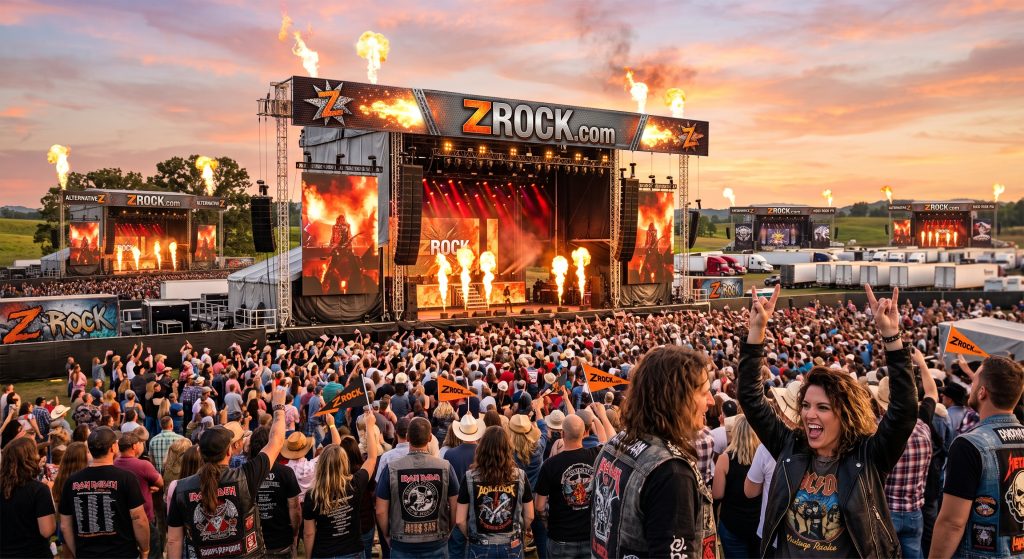
1. Pyrotechnics, FX, & Fire Permits (25% of Overhead)
Rock and roll demands spectacle, but high-decibel displays don’t come cheap.
- The Hardware: Flame throwers, heavy atmospheric fog, concussion bombs, and stadium-wide laser rigs carry steep daily rental and consumable costs.
- The Bureaucracy: You can’t just press a button and shoot fire into the sky. Every single city requires local municipal fire marshal inspections, specialized licensed pyrotechnicians on site, and localized permit fees.
- The Insurance: Adding high-risk explosive elements drives liability insurance policies through the roof, often adding six-figure premiums to a tour’s multi-city run.
2. Heavy Logistics, Diesel, & Freight (30% of Overhead)
Audio towers capable of shaking 60,000 seats weigh dozens of tons. Moving a stadium-sized wall of sound takes serious horsepower.
- The Convoy: Major rock productions travel with anywhere from 40 to 90+ semi-trucks. Metallica’s M72 tour, for instance, requires nearly 90 trucks to transport its central stage and audio gear.
- Fuel Volatility: A sudden spike in diesel prices can rip a massive hole in a tour’s operating budget mid-season, adding tens of thousands in unexpected weekly expenses.
- Bus Fleets: Beyond freight, the band and key crew travel in a fleet of customized sleeper buses, each carrying heavy leasing and driver costs.
3. Stage “Leapfrogging” (20% of Overhead)
A full rock stadium stage takes 3 to 5 days to build, rig with lights, and teardown. Because bands perform every two to three nights, they can’t wait for a single stage to be dismantled and shipped to the next state.
- Triple Steel: Top tours lease two or three identical heavy-steel framework skeletons simultaneously.
- The Scheduling: While the band is melting faces on Stage A in Chicago, Stage B is already being assembled in Detroit, and Stage C is being packed into trucks in Minneapolis.
4. The Army of Techs & Local Labor (15% of Overhead)
Keeping a high-energy rock rig functioning safely night after night requires a massive human effort.
- Touring Personnel: A typical stadium tour employs 100 to 200+ full-time touring crew members—guitar techs, drum techs, front-of-house sound engineers, riggers, and lighting directors—who all receive daily rates and per diems.
- Local Union Hands: Upon arrival, the tour hires hundreds of local stagehands, riggers, loaders, security guards, and medical staff per venue to execute the build and run crowd control.
5. Commissions & Off-the-Top Fees (10% of Overhead)
Before the band sees a single dime, the administrative machine takes its cut directly off the gross ticket sales:
- Booking Agents: ~10%
- Personal Management: 10% – 15%
- Business Managers & Accountants: 5%
The Bottom Line: Thin Margins on Huge Money
When a stadium show grosses $5 million in a night, it looks like an absolute payout. But once venue leases, union labor, diesel, crew payroll, gear rentals, and management cuts are settled, the artist’s net profit margin frequently lands between 15% and 25%.
Rock ‘n’ roll might be immortal…but keeping the circus moving across the country is one of the most expensive businesses on the planet.

Leave a Reply